A breaker that trips once after a storm may not be a major concern. A breaker that trips every time the microwave, heat pump, or shop equipment starts is different. An electrical troubleshooting service is designed to find the actual cause of a problem, not just reset the symptom and hope it stays away.
For homeowners and businesses, electrical issues often begin small: a light that flickers, an outlet that feels loose, a circuit that shuts off without warning, or equipment that will not stay powered. Those signs can point to a failed device, an overloaded circuit, a loose connection, damaged wiring, moisture intrusion, a panel issue, or a problem with the equipment itself. The right repair starts with accurate diagnosis.
What electrical troubleshooting should accomplish
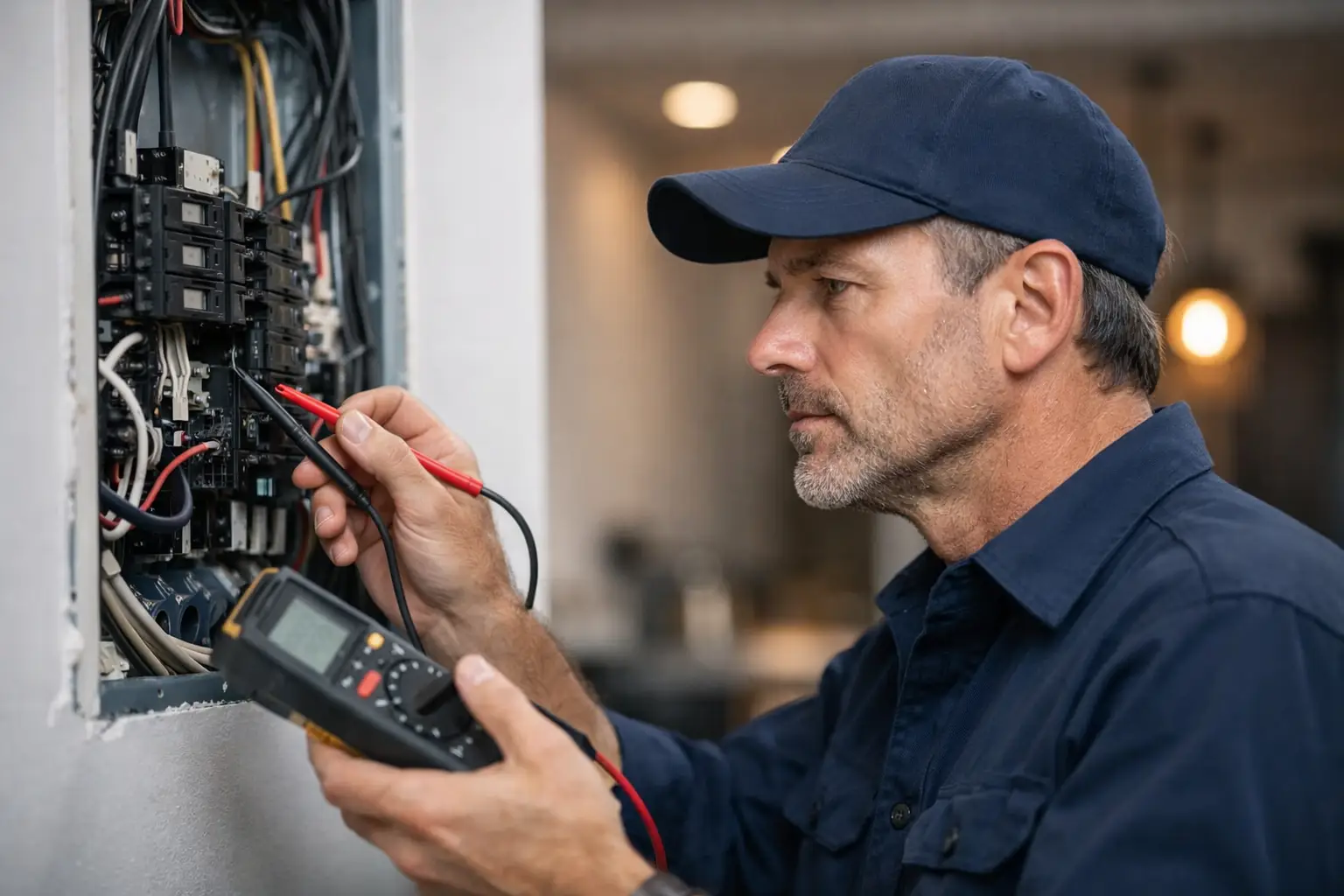
Troubleshooting is a structured process of testing an electrical system to identify where power is being interrupted, where a connection is failing, or why a protective device is operating. It is not simply replacing the outlet, switch, breaker, or fixture that appears to be involved.
A licensed electrician begins by asking when the problem happens and what is connected when it occurs. From there, the work may include checking voltage, testing circuit continuity, inspecting receptacles and switches, evaluating breaker performance, tracing a circuit, and examining accessible connections. The goal is to isolate the fault without creating unnecessary disruption to walls, ceilings, finishes, or business operations.
That distinction matters. Replacing a repeatedly tripping breaker without identifying an overload, short circuit, or ground fault can leave the original problem in place. Replacing a flickering light fixture may not help if the issue is a loose neutral connection farther back on the circuit.
Signs you should schedule an electrical troubleshooting service
Some electrical problems are inconvenient. Others can indicate a condition that needs prompt professional attention. Scheduling service is a sensible next step when a problem repeats, affects more than one device, or changes how a circuit performs.
Breakers that trip repeatedly
Circuit breakers are safety devices. They shut off power when they detect an overload, short circuit, or ground fault. If a breaker trips once after too many high-demand appliances were used at the same time, reducing the load may solve it. If it trips again under normal use, the circuit needs to be evaluated.
In a home, common causes include overloaded kitchen, laundry, garage, and bedroom circuits. In commercial spaces, equipment power demands, aging tenant-upfit wiring, and added workstations can push circuits beyond their intended capacity. The solution may be a repair, a dedicated circuit, equipment adjustments, or a panel capacity review. It depends on what testing shows.
Flickering, dimming, or intermittent lighting
A light that flickers only with one failing bulb is usually straightforward. Flickering that affects multiple fixtures, changes when appliances start, or occurs throughout a section of the building deserves closer attention.
Voltage drop, loose connections, incompatible dimmers and LED lamps, failing fixtures, overloaded circuits, and service-related issues can all cause lighting problems. A professional diagnosis helps separate a simple fixture repair from a circuit or panel concern.
Dead outlets, switches, or sections of a room
A nonworking outlet is not always a failed outlet. It may be controlled by a switch, protected by a tripped GFCI device elsewhere, disconnected by a failed connection, or affected by a breaker issue. In older homes and commercial spaces that have been modified over time, circuit layouts are not always obvious.
An electrician can test the affected point, check upstream devices, and determine whether the issue is isolated or part of a larger wiring problem. This is especially useful when power has been added during remodels, tenant improvements, or previous repairs.
Warm devices, buzzing, burning odors, or discoloration
Heat, buzzing, a burning smell, or brown marks around an outlet, switch, panel, or light fixture should not be ignored. Turn off power to the affected circuit if it can be done safely, avoid using the device, and arrange for qualified service.
These symptoms may result from a loose connection, damaged conductor, overloaded device, failing breaker, or arcing. They are not a do-it-yourself repair. Electrical failures can develop behind cover plates, inside junction boxes, or within equipment where the damage is not visible from the room.
GFCI or AFCI devices that will not reset
Ground-fault and arc-fault protection are designed to reduce shock and fire risk. A GFCI that will not reset may be reacting to moisture, a faulty appliance, damaged wiring, or another downstream issue. An AFCI breaker can trip because of wiring problems, damaged cords, certain equipment, or circuit conditions that need testing.
Repeated resetting is not a repair. A proper service call identifies why the protective device is responding and addresses the cause.
Why accurate diagnosis saves time and money
Electrical troubleshooting has a practical value: it prevents parts from being replaced by guesswork. A dead circuit could be caused by one loose connection, but reaching that connection may require methodical testing through several devices. Starting at the panel and working outward, or testing at the visibly failed outlet alone, is not always the most efficient route. The best approach depends on the circuit design and the symptom.
For property owners, this work can also prevent a small repair from becoming a larger interruption. A loose neutral connection, for example, can create inconsistent performance that affects lights, outlets, and sensitive electronics. A failing connection at equipment power can lead to downtime that is far more costly than the original repair.
For general contractors and facility managers, clear communication matters as much as technical findings. A dependable electrical contractor should explain what was tested, what was found, what repair is recommended, and whether the issue could affect adjacent circuits or planned work. That makes it easier to coordinate access, protect schedules, and make informed decisions.
Common repairs after troubleshooting
The repair should match the diagnosis. In many cases, the work is contained: replacing a failed receptacle, switch, GFCI device, dimmer, breaker, fixture component, or damaged section of wiring. Loose or overheated connections may need to be repaired in an outlet box, junction box, panel, or disconnect.
Other findings point to an improvement rather than a simple repair. A dedicated circuit may be needed for a microwave, disposal, refrigerator, sump pump, garage equipment, server rack, or EV charger. A panel upgrade may be appropriate when there is no safe capacity for added circuits, the equipment is outdated, or planned improvements require more space and load capability.
Commercial troubleshooting can also lead to conduit repairs, equipment disconnect work, tenant-upfit corrections, lighting control repairs, or low-voltage coordination. The scope should be based on the building’s use, applicable code requirements, the condition of existing work, and the need to keep operations moving.
What to do before the electrician arrives
You do not need to diagnose the system yourself, but a few details can make the visit more efficient. Note what stopped working, when it happens, whether a breaker trips, and what equipment was running at the time. If an outlet or switch is warm, discolored, buzzing, or smells burnt, leave it off and keep the area clear.
For businesses, identify whether the issue affects critical equipment, customer-facing areas, safety lighting, network hardware, refrigeration, or production. Let the electrician know about access requirements, operating hours, and any work that must be coordinated with a property manager, tenant, or general contractor.
Avoid removing panel covers, bypassing breakers, using extension cords as a permanent solution, or repeatedly resetting protective devices. Those steps can hide the symptom while increasing risk.
A local repair partner for recurring electrical issues
Electrical problems rarely improve through repeated resets and temporary workarounds. Whether the issue is one troublesome outlet, a lighting circuit that will not stay on, or equipment that keeps taking down a breaker, a licensed electrician can test the system and recommend a repair that fits the condition of the installation.
Stamper Electrical LLC provides residential and commercial diagnostic and repair support throughout Wake County, with clean workmanship and clear communication built into the service call. Getting the cause identified early gives you a safer system, a clearer repair path, and fewer surprises when you need power to work.
Need help troubleshooting an electrical problem?
Explore our electrical repair services, check our Raleigh and Wake County service area, or contact Stamper Electrical to discuss your project.
2 responses to “When to Call an Electrical Troubleshooting Service”
[…] that will not remain reset may have an overloaded load, a defective appliance, a damaged cord, or a fault in the wiring. Resetting it repeatedly can create more heat and delay the proper […]
[…] those conditions are not present, the issue may be inside the receptacle, at a wire connection, elsewhere on the circuit, or within the appliance […]