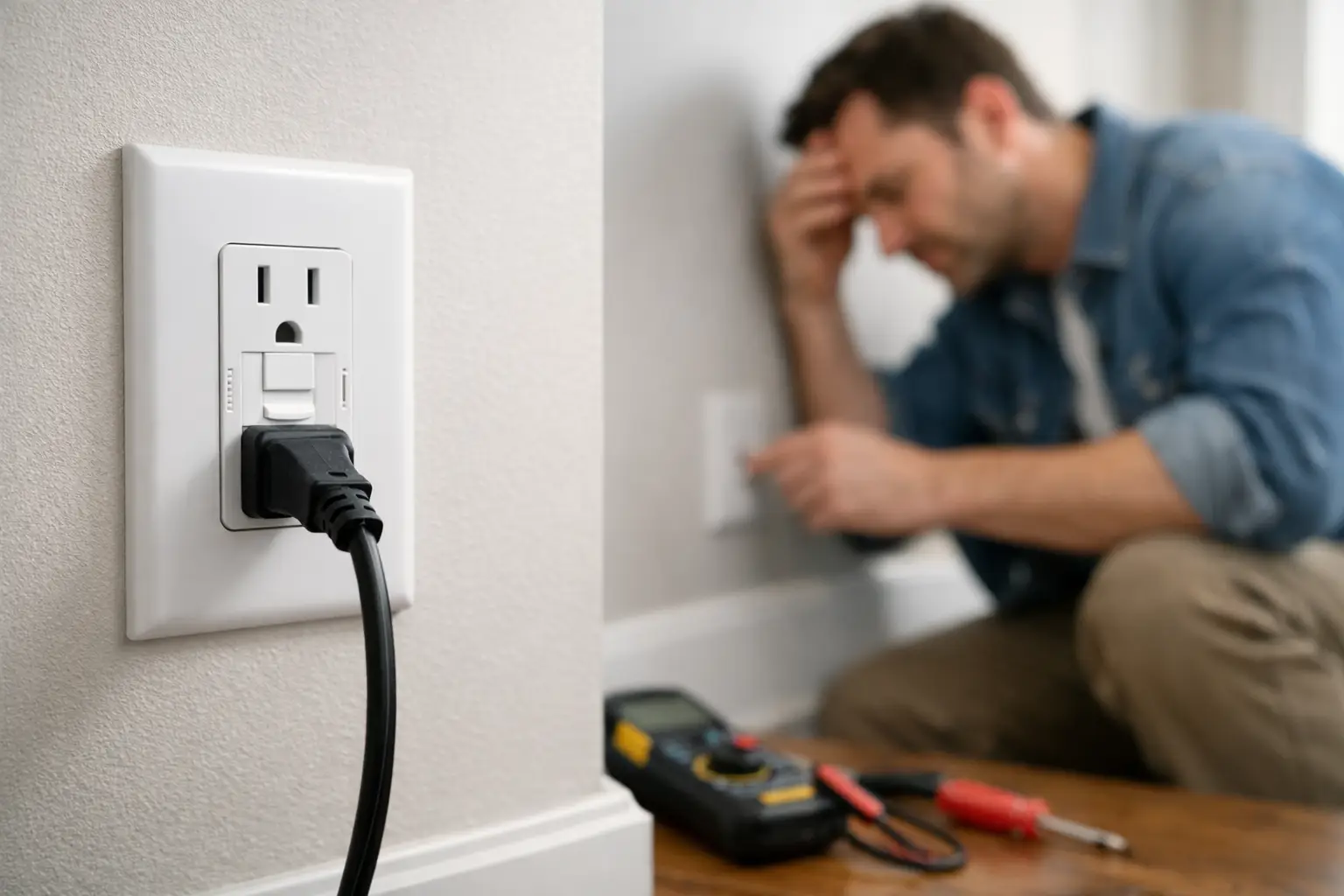
A bathroom receptacle trips halfway through drying your hair. The garage outlet will not stay reset after a storm. Or the kitchen counter outlet shuts off the coffee maker and everything plugged in nearby. When a GFCI outlet keeps tripping, it is doing one of two things: responding to a possible electrical hazard or showing signs that the outlet, appliance, or circuit needs attention.
A Ground Fault Circuit Interrupter, commonly called a GFCI, is designed to shut power off quickly when it detects electricity taking an unintended path. That protection is especially important around water, which is why GFCI protection is common in bathrooms, kitchens, garages, unfinished basements, laundry areas, crawl spaces, and outdoor locations.
The goal is not simply to get the reset button to stay in. The goal is to determine why the protection operated and correct the underlying issue safely.
What a GFCI Outlet Is Detecting
A GFCI compares the electrical current leaving the outlet with the current returning to it. Under normal conditions, those amounts match. If a small amount of current is leaking elsewhere – potentially through damaged insulation, moisture, an appliance, or a person – the GFCI trips and cuts power.
That is different from a standard circuit breaker. A breaker primarily protects wiring from excessive current caused by overloads and short circuits. A GFCI is focused on ground faults and shock protection. A circuit can have plenty of available capacity and still trip a GFCI because of a relatively small current imbalance.
Many GFCI receptacles also protect additional standard outlets downstream on the same circuit. That means the outlet that appears to be working may not be the one with the reset button. If several receptacles lose power together, look for a GFCI in a nearby bathroom, garage, kitchen, utility room, exterior location, or electrical panel.
Common Reasons a GFCI Outlet Keeps Tripping
Moisture at the outlet or connected equipment
Moisture is one of the most common causes, particularly at outdoor receptacles, garage outlets, crawl spaces, and locations near sinks. Rain can enter a damaged exterior cover, condensation can form in a box, and a wet cord or plug can create a path for leakage current.
Do not keep resetting an outlet that has been exposed to water. Leave it off and allow a qualified electrician to inspect the receptacle, box, cover, and circuit conductors. Outdoor outlets should have weather-resistant devices and covers designed to protect plugs while they are in use.
A plugged-in appliance has leakage or damage
Portable appliances frequently cause GFCI trips. Common examples include hair dryers, coffee makers, toaster ovens, refrigerators, freezers, power tools, pressure washers, landscape equipment, aquarium equipment, and older extension cords. Heating elements and motors can develop small leakage paths as they age, even when the appliance appears to operate normally.
A practical first check is to unplug everything connected to the affected outlet and any outlets that lost power with it. Reset the GFCI. If it holds, reconnect items one at a time. If the outlet trips when a particular item is plugged in or turned on, stop using that item until it can be repaired or replaced.
Be careful with refrigerators and freezers. They may be on a GFCI-protected circuit depending on location and the installation requirements in effect when the work was completed. If a refrigerator repeatedly trips protection, the right answer is a proper diagnosis of the appliance and circuit, not bypassing the GFCI or moving it to an unsuitable outlet.
A worn or failed GFCI device
GFCI outlets do not last forever. The internal sensing and reset components can wear out, especially in high-use locations or damp environments. A failed device may refuse to reset, trip with nothing plugged in, reset briefly and trip again, or show an abnormal indicator light pattern.
Replacement may be straightforward for a licensed electrician, but it is still worth checking the circuit before assuming the receptacle is the only problem. A new GFCI will trip too if moisture, damaged wiring, or a failing appliance remains on the protected side of the circuit.
A wiring issue on the circuit
Loose connections, damaged cable insulation, deteriorated splices, pinched conductors, and incorrect line-and-load connections can all create trouble. These issues are more likely after a remodel, outlet replacement, water intrusion, rodent damage, or work performed in an attic, crawl space, or exterior wall.
A GFCI that trips with every appliance unplugged points more strongly toward a wiring issue, a failed GFCI, or a downstream device. Diagnosing that condition requires electrical testing and often involves separating parts of the circuit to locate where the fault begins. This is not a good situation for repeated trial-and-error resets.
Too much equipment on one circuit
An overloaded circuit usually trips the breaker rather than the GFCI, but heavy usage can still reveal a problem. For example, a garage circuit serving tools, a refrigerator, battery chargers, and outdoor equipment may have more demand and more opportunities for cord damage or moisture exposure.
If the breaker and GFCI both trip during normal use, the circuit may need a closer look. The solution could be as simple as replacing a damaged tool cord, or it could involve adding a dedicated circuit for equipment that should not share power with general-use outlets.
Safe Checks Before You Schedule Service
Start with a simple visual and functional check, without removing outlet covers or opening electrical boxes. Unplug connected devices, dry any obvious surface moisture, and press the GFCI’s test button. The outlet should turn off. Press reset to restore power.
If the reset button will not stay in, verify whether the circuit breaker is on. A tripped breaker may sit in a middle position and must be moved fully to OFF before being reset to ON. If the breaker immediately trips again, leave it off.
Check nearby GFCIs as well. One GFCI may protect several outlets, and another device upstream may be the one that needs resetting. Avoid using extension cords to work around a dead outlet, especially in kitchens, bathrooms, garages, or outdoors. That can create a new hazard while hiding the original problem.
Never defeat GFCI protection, replace it with a standard outlet, tape the reset button in place, or install a larger breaker to stop nuisance tripping. Those actions can remove protection without correcting the fault.
When to Call a Licensed Electrician
Some GFCI issues deserve prompt professional attention. Schedule service if the outlet trips with nothing plugged in, trips after rain or water exposure, feels warm, has discoloration or a burning smell, makes buzzing sounds, or will not reset after the breaker has been properly checked.
You should also call if multiple outlets lose power, a breaker trips repeatedly, outlets in a bathroom or kitchen are dead, or the problem began after electrical work, remodeling, or storm damage. In commercial spaces, a tripping GFCI can interrupt cleaning equipment, break-room appliances, exterior signage, maintenance tools, or tenant operations. Quick diagnosis helps prevent repeat disruptions and avoids temporary workarounds that create liability.
A licensed electrician can test the GFCI, verify grounding and polarity, inspect upstream and downstream connections, identify damaged equipment, and determine whether a dedicated circuit or weatherproof upgrade is needed. For homes and businesses in Wake County, Stamper Electrical provides electrical diagnostics with clean workmanship and clear communication about what failed, what needs correction, and what can wait.
Do Not Treat Repeated Tripping as a Minor Annoyance
A GFCI that trips once because a wet tool was plugged in may have done exactly what it was designed to do. A GFCI that keeps tripping is different. It may be warning you about moisture, equipment leakage, a worn device, or a circuit fault that will not improve on its own.
Leave the circuit off when there is any sign of heat, damage, or water intrusion. A proper diagnosis restores more than power – it restores confidence that the outlet is protecting the people and equipment that depend on it.