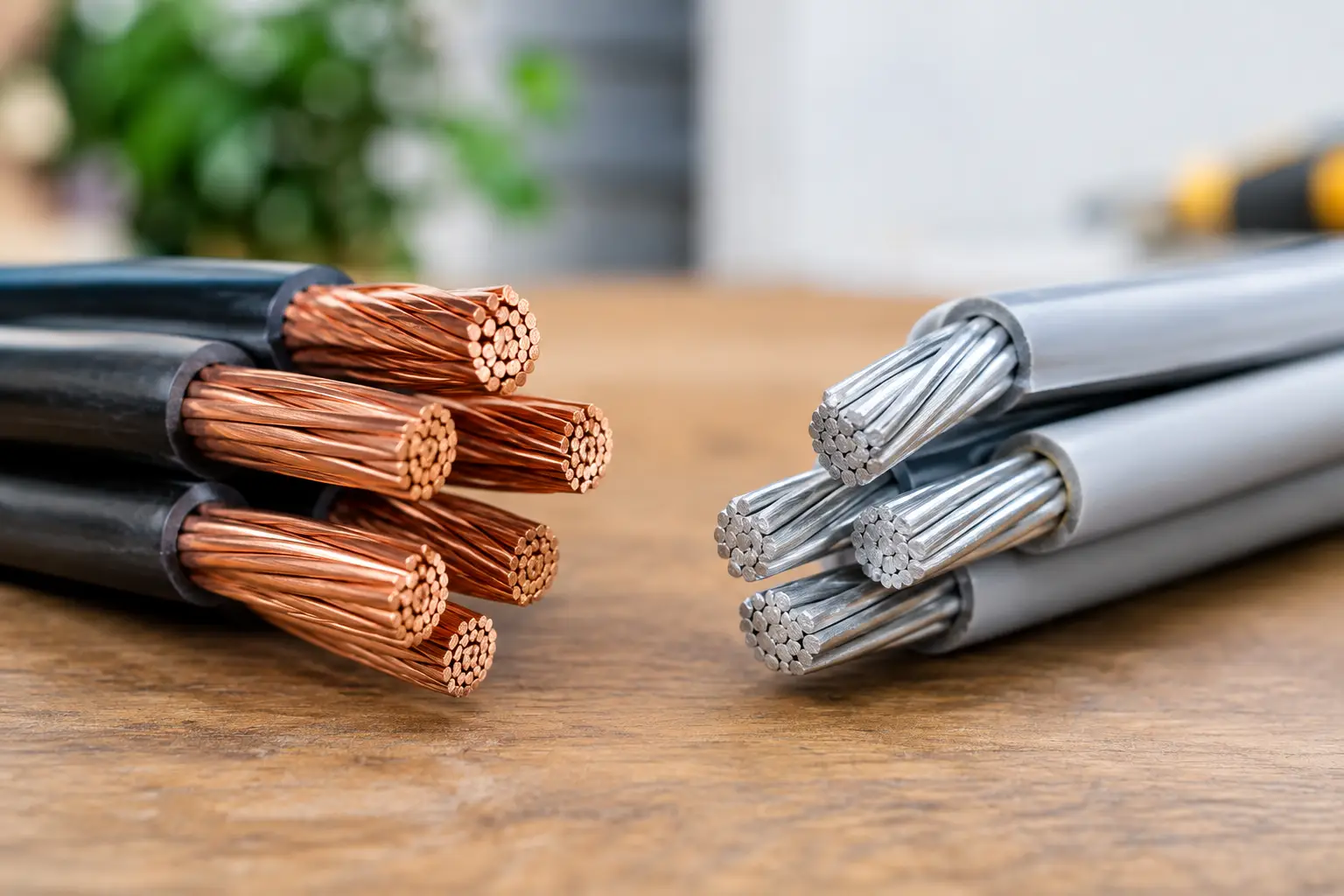
A service panel can contain both copper and aluminum conductors without there being a problem. The real question in a copper vs aluminum wiring decision is where the conductor is used, how it is sized, and whether every termination is rated and installed correctly. For homeowners, business owners, and facility managers, that distinction matters far more than choosing one metal by reputation alone.
Copper is the familiar choice for most interior branch circuits, while aluminum is common and appropriate for larger service conductors, feeders, and equipment connections. Each has a place in a safe electrical system. Problems usually arise when an existing installation is aging, a connection is loose, or the wrong device or installation method is used for the conductor.
Copper vs Aluminum Wiring: The Practical Difference
Copper conducts electricity more efficiently than aluminum. As a result, an aluminum conductor generally needs to be larger than a copper conductor to carry the same electrical load safely. Copper is also stronger for its size and handles repeated bending well, which makes it practical for the smaller conductors routed through walls to receptacles, switches, lighting, and dedicated appliance circuits.
Aluminum is lighter and usually less expensive than copper. On a long feeder run from a service panel to a subpanel, detached building, piece of equipment, or commercial electrical room, those cost and weight differences can be significant. Using properly sized aluminum conductors can be a sound design decision, especially where large wire sizes would make copper difficult and costly to install.
The materials also behave differently as temperatures change. Aluminum expands and contracts more than copper. It can also form an oxide layer at exposed surfaces. Neither characteristic makes aluminum inherently unsafe, but both make correct terminations critical. The breaker, lug, splice connector, receptacle, or equipment connection must be listed for aluminum conductors, and the connection must be prepared and torqued to the manufacturer’s specifications.
Where Copper Is Usually the Better Fit
Copper is the standard choice for most residential and light-commercial branch wiring. These are the circuits that serve everyday loads such as general-purpose receptacles, lighting, kitchen appliances, bathroom outlets, HVAC controls, and dedicated circuits for equipment.
A copper branch circuit is compact, durable, and compatible with the devices commonly used throughout a building. It is often the straightforward choice for remodel wiring, outlet additions, lighting upgrades, and small circuit extensions. When a homeowner adds a garbage disposal, microwave, heat pump, workshop receptacle, or Level 2 EV charger, copper is frequently used for the branch-circuit portion of the work.
Copper can cost more up front, particularly when a project requires long runs or large conductors. Still, material price is only one part of the job. Circuit length, load calculation, installation access, panel capacity, conduit requirements, and the condition of the existing electrical system all affect the final scope.
When Aluminum Makes Sense
Aluminum is widely used in modern electrical work for service entrance conductors and larger feeders. It is often installed between a meter and main panel, from a main panel to a subpanel, or to supply larger equipment where conductor sizes increase substantially.
For a commercial tenant upfit, aluminum may be a practical option for feeder conductors supplying a distribution panel, rooftop equipment, or other substantial loads. It can also make sense for a detached garage, accessory building, or larger residential service upgrade. The right choice depends on the calculated load, conductor length, termination ratings, environment, and local code requirements.
A qualified electrician does not select aluminum merely because it costs less. The conductor has to be sized correctly, protected correctly, landed on compatible lugs, and installed with attention to manufacturer torque values. Good workmanship at the panel and equipment is not cosmetic detail. It is part of the electrical safety system.
Older Aluminum Branch Wiring Requires Extra Attention
Not all aluminum wiring is the same. Some homes built primarily in the late 1960s and 1970s used aluminum conductors on smaller branch circuits. This older solid aluminum branch wiring deserves careful evaluation because the devices and connection practices used at that time may not perform like current listed materials and methods.
The concern is usually at connection points, not in the wire hidden inside a wall. A loose or incompatible termination can create resistance, which produces heat. Over time, that heat can damage a receptacle, switch, splice, or conductor insulation. Replacing a single discolored outlet without investigating the circuit can leave the underlying issue unresolved.
Warning signs include flickering lights, warm or discolored outlets or switches, a burning smell, breakers that trip without an obvious overload, and buzzing at electrical devices or the panel. These symptoms can have several causes, but they warrant prompt professional attention. Do not repeatedly reset a breaker, tighten a panel connection yourself, or assume a new receptacle solves a wiring issue.
If older aluminum branch wiring is present, an electrician can assess its condition, inspect accessible terminations, identify incompatible devices, and recommend an appropriate repair strategy. Depending on the circuit and findings, that may involve approved connector methods, properly rated devices, circuit replacement, or a broader electrical upgrade. The best approach is based on the actual installation, not a one-size-fits-all recommendation.
Terminations Matter More Than the Metal Alone
Both copper and aluminum wiring rely on clean, secure, correctly rated connections. A copper conductor can overheat at a loose termination. An aluminum conductor can perform reliably for decades when it is properly sized, installed, and maintained.
This is especially relevant during panel upgrades, generator connections, EV charger installations, and commercial equipment additions. Higher-load work places more demand on conductors and terminations. Before adding a charger or new equipment, the electrician should evaluate available panel capacity, perform a load calculation, verify conductor sizing, and determine whether a dedicated circuit or service upgrade is needed.
A common mistake is to focus only on the amp rating of a breaker. The breaker, wire size, conductor type, terminal rating, enclosure, and connected equipment all have to work together. Increasing breaker size to stop nuisance tripping is not a repair. It can create an overheating risk if the circuit is not designed for the larger overcurrent protection.
How to Choose for a New Project
For most small interior circuits, copper is the practical default. For larger feeders and service conductors, aluminum may offer a cost-effective, code-compliant solution when the installation is designed and completed correctly. Neither answer should be made from a material price alone.
Start with the purpose of the circuit. A new EV charger, electric range, heat pump, workshop, commercial piece of equipment, or subpanel should have a load calculation and a clear plan for circuit routing and disconnecting means. Long runs may change conductor sizing. Outdoor, underground, attic, and conduit installations have different requirements. Existing panel capacity can also determine whether the project is a simple circuit addition or part of a larger upgrade.
For Raleigh-area homes and businesses, a licensed electrician can help separate an ordinary wiring project from an issue that calls for panel work, feeder replacement, or a service upgrade. Clear recommendations should explain what is being installed, why the conductor type fits the application, and what work is needed to keep the installation safe and serviceable.
Electrical wiring is not a place to rely on assumptions about what is behind a wall or inside a panel. A careful inspection and a properly planned repair or installation can protect the building, the equipment connected to it, and the people who depend on both every day.